Laying out in the dark: watchouts and highlights
Yes, you can work in the dark, it is certainly possible. Below are things to consider.
Watchouts:
The camera will be hard to use: Using the camera of the tool to aim at your targets will be difficult. If you have to manually aim and center on targets with the camera, the low light will make it hard to see on the camera. If using manual targets with a center or cross hair you must align to manually, consider temporarily lighting the area where the target is.
Highlights:
Likely improved prism tracking: The interference from light is much lower when in the dark. Reflections from the sun from objects such as car windows, street signs, worker vests, etc. is must less likely. Remember that when using the prism tracker (rather than the laser), the tool is simply observing reflections of infrared light. Prisms are highly reflective, making them easy to find in the dark. When the sun is shining bright (especially at low horizons like at sunrise and sunset), working in direct sunlight could actually be much more difficult if using the prism tracker.
Laying out in the sunlight: watchouts and highlights
Working during the day is most common, but there are still watchouts and highlights when using the tool.
Watchouts:
Infrared reflection interference possible: remember that sunlight can distort image quality when entering a lens, usually known as "stray light."
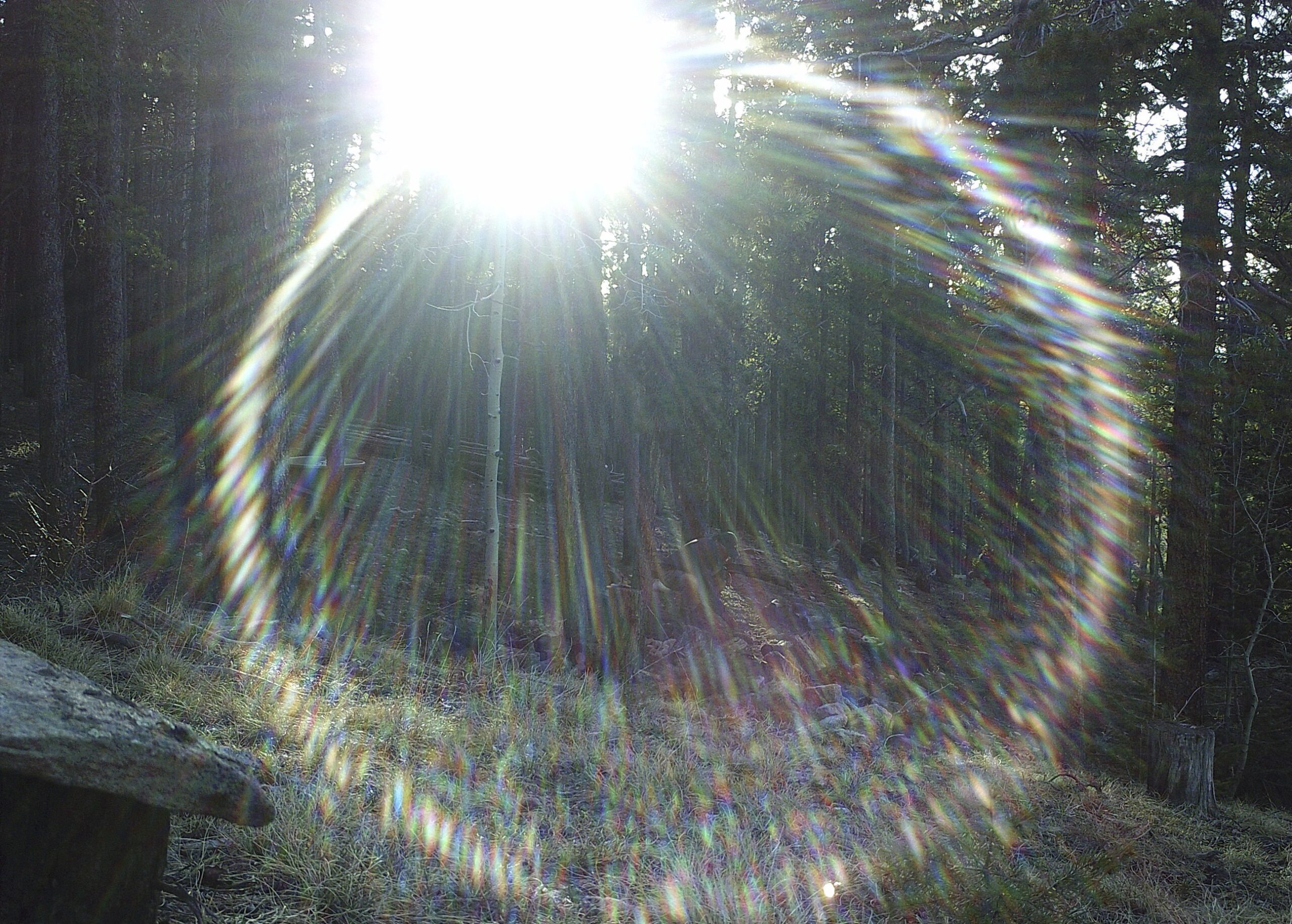
While you may not notice this in the camera of the tool, when working in direct line with the sun (or in direct line of anything that reflects infrared light), the telescope of the tool will struggle to identify the prism vs. simple (but strong) infrared reflections.
Especially during sunrise and sunset, try to keep the tool looking away from the sun. This will keep the lens clear of stray light and keep your prism the main reflection it recognizes.
Highlights:
Improved visibility through camera: The camera is a core functionality of the tool, as it helps turn the total station to your targets as you work. Like almost any camera, it's hard to use in the dark unless you can light up the area somehow. The camera usage experience should be much improved when working in the daylight.
Conclusion
In sum, working in the darkness likely will give you a better prism tracking experience, but poor visibility through the head unit's camera. With daylight, you can navigate to your targets more effectively, but may struggle with prism connection when infrared reflections are too high.
Understanding these conditions in darkness and light should help you find a solution to issues you may face regarding this.
Comments
0 comments
Please sign in to leave a comment.